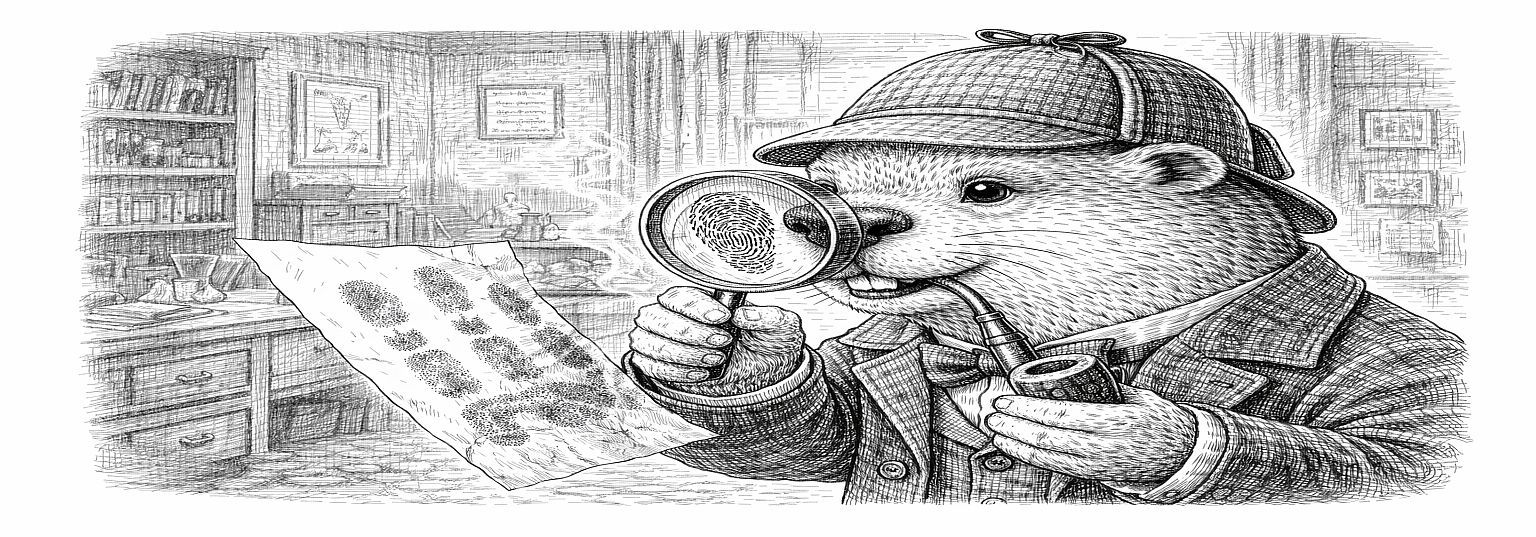


The short answer is evidence.
Not evidence that everything is perfect. Not evidence that everybody followed every procedure exactly as it was written. Auditors have been around long enough to know better than that. They are trying to establish whether the organization can support what it says happened. Take an invoice. The amount on the invoice is only the beginning. Where did the price come from? Was it the standard price, a contract price, a negotiated exception or something somebody entered manually? Who was allowed to make that change? Was approval required? Is there a record of it? Did the amount eventually find its way into the right accounts? An auditor may start with a number, but pretty quickly that number becomes a trail.
Following the trail
That is why auditors sample transactions. They aren't necessarily interested in invoice 487392 because there is something suspicious about invoice 487392. They want to see whether they can follow it through the business. The order says one thing. The invoice agrees with it. The payment matches the invoice. The accounting entry landed where it should. The dates make sense. The person who approved the exception had the authority to approve it.
Good.
Then they pick another one. This time something doesn't agree. That doesn't automatically mean somebody did something wrong. There may be a perfectly good reason. A customer may have negotiated special terms fifteen years ago. A purchasing rule may have changed. An old program may contain an exception that everyone in the department understands but nobody ever thought to document. Now the auditor has a question. And questions are where audits become interesting.
Controls are more than procedures
Most organizations can produce a procedure that says what is supposed to happen. The harder question is whether that procedure describes what actually happens. A control might exist in a written policy. It might be enforced by software. It might require approval from a supervisor. It might depend upon a report that somebody reviews every Tuesday morning.
Sometimes the control is simply that Gloria has been doing the job for 27 years and knows immediately when something doesn't look right. From an audit standpoint, those are very different things.
The auditor wants to know whether the control exists, whether it operates consistently and whether there is evidence that it operated when it was supposed to. This is one reason older systems can be surprisingly difficult to audit. It isn't necessarily because they are poorly controlled. Some have been refined over decades and contain an extraordinary amount of accumulated business knowledge.
The difficulty is discovering where those controls are and explaining why they exist.
The business is bigger than the documentation
Documentation is useful, but it is only one witness. The source code may tell a different story. The data may reveal exceptions that aren't mentioned in the documentation. The person running the process may explain that the written procedure hasn't been followed since the acquisition in 2018. None of those sources necessarily has the whole answer. Put them together, however, and something useful begins to emerge. This is where the auditor's problem and management's problem become remarkably similar. Both need to understand how the business actually operates, rather than how everyone assumes it operates.
The interesting part is where things don't agree
If the documentation, code, data and people all tell exactly the same story, there may not be much more to investigate.
When they don't agree, pay attention.
The contract says customers in a particular class receive a 12 percent discount. The billing program calculates 10 percent. The documentation says 15 percent. The customer has been receiving 8 percent for six years. The immediate question might be whether the invoice is correct. The more valuable question is why there are four different answers. Perhaps the contract changed and the software didn't. Perhaps somebody made a temporary accommodation that became permanent. Perhaps the documentation is simply obsolete. Perhaps the code contains a rule nobody remembers adding. Whatever the explanation, the disagreement has exposed something the organization didn't fully understand about itself. That matters well beyond the audit.
The audit ends. The evidence doesn't.
An auditor needs enough evidence to reach conclusions about the matters being examined. Management has a much larger opportunity. The same trail can expose undocumented business rules, unusual dependencies, obsolete procedures, concentrations of knowledge, inconsistent practices and controls that depend more heavily on individual people than anyone realized. Those are not merely accounting concerns. They affect succession, system changes, acquisitions, compliance, customer relationships and increasingly, the ability to use AI intelligently inside the business.
Discovery enters the picture.
looks across the evidence an organization already has: source code, data, documentation and the knowledge of the people who actually run the business. It looks for relationships among those sources and, importantly, places where they disagree.
Because agreement provides confidence. Disagreement provides a place to look.
Your auditor may have arrived looking for evidence that a particular number can be trusted. Along the way, the organization may discover something considerably more valuable: evidence of how the business really works.