


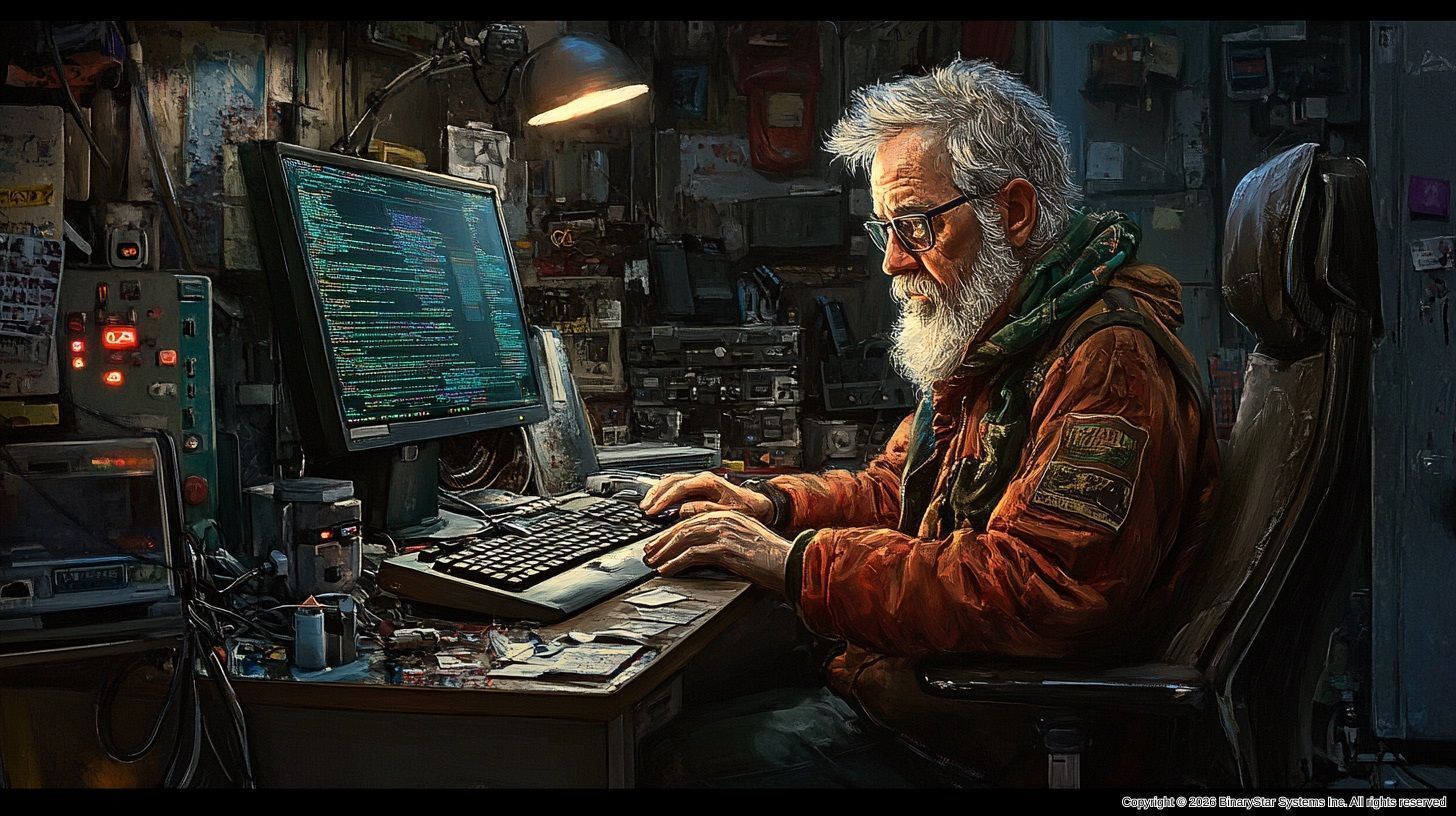


The Talent Cliff: A Quiet Crisis
Your Pick developers—often in their 60s or 70s—have been silent heroes. They know the quirks in your billing engine. They remember why a field was repurposed back in 1997. They can trace a record ID through 15 layers of indirection. They wrote and rewrote mission-critical logic over decades, accumulating unwritten institutional memory. But now, they’re preparing for retirement.
The Impact of Attrition
The problem isn’t just the loss of coding skills—it’s deeper:
- Business logic is undocumented
- Dependencies are not always obvious
- New hires lack context
- Your systems may be stable today—but brittle tomorrow
Organizations that wait to act often find themselves with operational crises, expensive consulting bills, or worst-case scenarios: production downtime with no one left to fix the problem.
Why CEOs Should Care
This is not just an IT issue—it’s a strategic business risk. Legacy systems house the logic behind:
- Sales and order management
- Pricing rules
- Supply chain workflows
- Customer contracts
If those systems fail—or even stagnate—your ability to compete, comply, and grow is jeopardized.
Business continuity, compliance, and future scalability are all at stake.
The HR View: A Shrinking Talent Pool
HR teams have long struggled to recruit Pick developers. Universities haven’t taught MultiValue for decades. Job boards return few qualified resumes. Many who remain are working as contractors or semi-retired consultants. Demand is up. Supply is vanishing.
If your organization is relying on:
- One or two key individuals
- External contractors on call
- Deferred hiring due to budget delays
...you are one resignation or health issue away from a crisis.
Four Approaches to Consider
Here are four strategies—complementary, not mutually exclusive—that HR and executive leadership can pursue now:
1. Knowledge Capture and Documentation
Start by systematizing what your senior developers know. Build a team to shadow, document, and extract institutional logic.
Tactics:
- Record code walkthroughs and architecture sessions
- Create field-level dictionaries and metadata definitions
- Use AI tools (like MYRA) to ingest and analyze Pick source code
- Encourage senior staff to narrate why things work the way they do
Why It Works: You can’t modernize what you don’t understand. Capturing logic while experts are still available is your best insurance policy.
2. Upskilling & Cross-Training
Train a new generation of developers to understand enough of the legacy system to maintain and interface with it—without needing them to become Pick wizards.
Tactics:
- Pair junior developers with senior Pick talent
- Focus on interoperability: teach them how to use APIs to communicate with Pick
- Introduce tools that abstract the legacy complexity
Why It Works: With the right tools and mentorship, junior developers can keep the lights on—and contribute to modernization.
3. Create a Modernization Roadmap
Modernization doesn’t have to mean “rip and replace.” Start with a roadmap: stabilize the present, prepare for the future.
Tactics:
- Inventory your Pick applications and rate by business criticality and complexity
- Identify integration points with modern systems (ERP, CRM, analytics)
- Choose pilot apps that are safe to refactor or rebuild
- Migrate data dictionaries and business logic in phases
Why It Works: You protect operations while creating options. Hybrid architectures (modern UI, legacy logic) buy you time and reduce disruption.
4. Partner with Experts Who Know Pick
There’s a small but capable community of firms specializing in Pick modernization and migration. Leverage them.
Tactics:
- Bring in partners who understand Pick and modern architecture (e.g., Node.js, MongoDB)
- Choose firms that extract and transform—not just rewrite
- Validate credentials: this isn’t for generalist developers
Why It Works: You benefit from experience and proven playbooks. Knowledge transfer becomes lasting, structured, and explainable.
What Happens If You Don’t Act?
Case Study: A regional distributor lost $2.5 million in stalled orders when their last Pick programmer retired. A closing routine bug went unresolved for two weeks. Emergency consultants cost another $200,000.
This is avoidable.
The cost of inaction rises:
- Recruitment delays grow
- Consultants become more expensive
- Talent leaves without training others
- Every integration becomes harder
The MYRA Advantage: How AI Can Help
At BinaryStar Systems, we’ve built MYRA, an AI-powered system to intelligently modernize Pick applications.
MYRA Works in Three Phases:
- Ingest legacy Pick code and business logic
- Disentangle UI, business rules, and data logic
- Modernize into structured, API-ready code (Node.js + MongoDB)
Key Features:
- Preserves business logic fidelity
- Automates dictionary translation
- Generates pilot-ready modules
- Offers full audit trail and explainability
MYRA accelerates knowledge transfer and reduces your dependency on tribal knowledge.
How HR Can Lead the Change
This is not just a tech issue. HR plays a key role in orchestrating the transition:
| Action | Outcome |
|---|---|
| Initiate a skills audit | Understand who knows what |
| Launch mentorship programs | Bridge junior and senior developers |
| Support AI-assisted capture | Turn undocumented logic into long-term value |
| Recruit hybrid roles | Attract devs for both legacy and new systems |
| Align with IT | Drive workforce planning through modernization |
Frame it as workforce sustainability, not just staffing.
A Transitional Architecture: The Safe Middle Ground
You don’t need to refactor everything overnight. A hybrid solution offers a low-risk path:
- Wrap legacy logic in APIs using StarView or Nucleus
- Expose data through MongoDB replicas
- Build new UIs using React or modern tools
This enables incremental transformation—without downtime.
Strategic Imperatives for the C-Suite
| Decision Area | Recommendation |
|---|---|
| Business Continuity | Fund immediate knowledge transfer |
| Digital Transformation | Build a phased modernization roadmap |
| Talent Development | Create hybrid roles and foster mentorship |
| Cost Management | Avoid emergency spend via proactive investment |
| Vendor Strategy | Choose partners with Pick and AI modernization skills |
Management summary: The Clock Is Ticking
Your Pick workforce isn’t just aging—they’re retiring. The knowledge gap is growing. The talent market is shrinking. And competitors are modernizing.
But you have a choice.
You can preserve, capture, and evolve your systems. You can use AI and modern tooling to extract value and future-proof your business.
It starts with a decision to act—before the choice is made for you.
Next Steps for CEOs and HR Leaders
- Schedule a cross-functional meeting with IT and HR within 2 weeks
- Launch a Pick knowledge retention initiative within 30 days
- Engage BinaryStar to evaluate modernization readiness with MYRA
- Budget a pilot project to validate safe modernization
- Begin recruiting hybrid-skill developers for the transition
Next Step:
🗓️ Schedule a discovery call
Talk about issues and opportunities for your current system before you commit.
Next Article:


