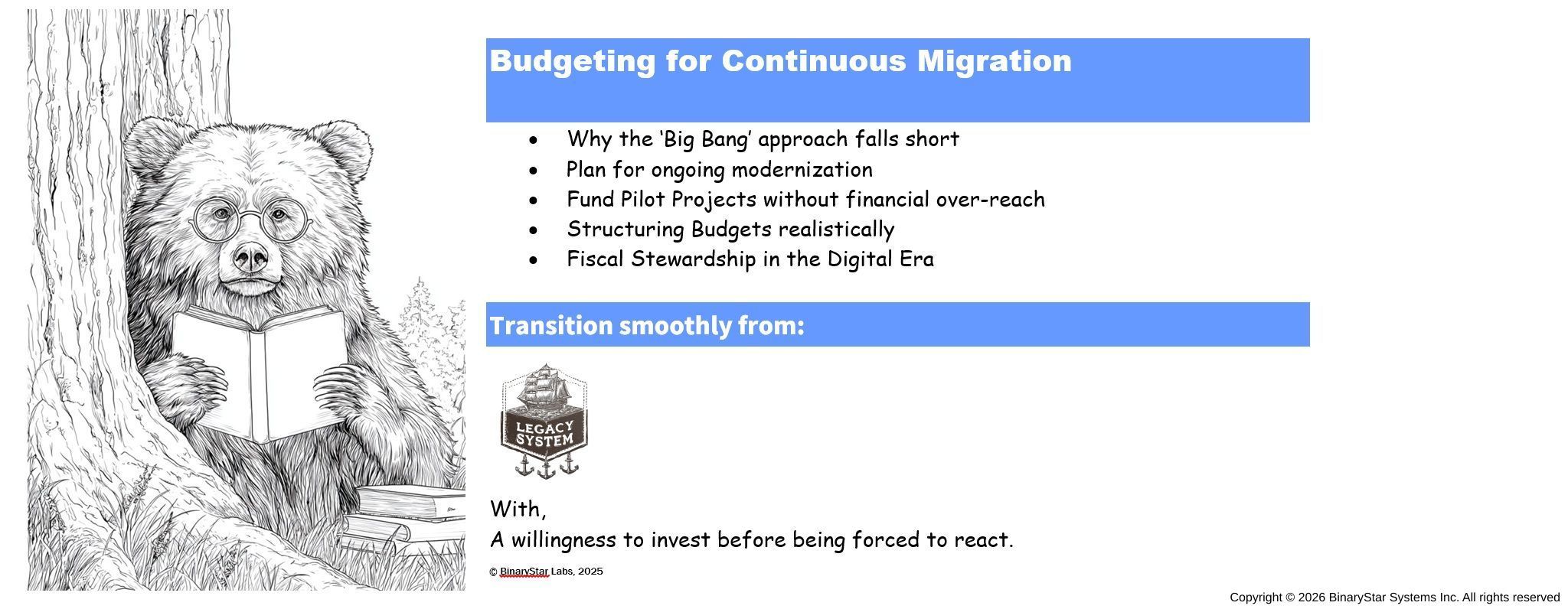


Budgeting for Continuous Modernization
Insights from an Independent CPA on Planning for the Future
Executive Summary
As a Certified Public Accountant who has audited and advised mid-sized and enterprise-level companies for over two decades, I've watched countless organizations struggle with one persistent issue: how to responsibly finance digital modernization.
Too often, modernization is approached as a one-time IT overhaul—an isolated capital expenditure to “get things current.” But in today’s digital economy, modernization is a continuous process, not a single transaction. And it requires a budgeting strategy that reflects that reality.
In this article, I’ll share a financial perspective on how companies should plan for ongoing modernization, fund pilot projects without derailing operations, and transition smoothly from aging legacy systems to scalable, cloud-ready infrastructure. Whether you're a CFO, CIO, or financial controller, these insights aim to help you balance risk, innovation, and accountability.
1. Understanding Continuous Modernization
Continuous modernization means recognizing that your technology infrastructure must evolve incrementally and perpetually.
I advise clients to treat technology modernization like they treat:
- Talent development
- Compliance frameworks
- Cybersecurity
These aren’t one-off investments—they’re ongoing disciplines. If your budgeting model still treats technology as a rare capital project, you’re likely underinvesting or investing in the wrong areas.
2. Why the “Big Bang” Approach Falls Short
Many companies still pursue “big bang” modernization—allocating large budgets to revamp their systems every 8 to 10 years. The pitfalls of this strategy are numerous:
- Budget overruns: Most major IT overhauls go significantly over budget.
- Business disruption: These projects often require downtime or temporary halts to operations.
- Rapid obsolescence: The pace of change means systems are outdated before full ROI is realized.
Instead, I recommend structuring modernization as a rolling program, where small-scale projects and upgrades are consistently funded, tested, and integrated into operations.
3. Funding Pilots Without Financial Overreach
One of the safest ways to initiate modernization is through pilot programs.
As a CPA, I advise finance teams to treat pilot funding as part of strategic innovation spending, not core IT maintenance. Here’s what a fiscally responsible pilot looks like:
- Defined timeline: Typically 30–90 days.
- Limited scope: One process or business function.
- Clear metrics: Success must be measurable.
It’s also prudent to create a “sunset clause” for pilot budgets—if success criteria aren’t met, the funding doesn’t automatically roll over.
4. Budgeting for Migration Phases
Modernization isn’t just about the pilot—it’s about what comes next. From an accounting standpoint, the migration process typically breaks down like this:
| Phase | Budget Category | Financial Strategy |
|---|---|---|
| Pilot | Innovation/OpEx | Short-term allocation, fast feedback |
| Assessment & Planning | Consulting CapEx/OpEx | Budget for advisory services and TCO analysis |
| Migration | Hybrid CapEx/OpEx | Multi-year budget line with phase gates |
| Ongoing Modernization | Operational OpEx | Monthly/quarterly update cycles |
Each phase should be accompanied by:
- Cost-benefit projections
- Time-based amortization (for capitalizable elements)
- Scenario models (best case, worst case, baseline)
5. Audit Considerations and Financial Controls
From an audit perspective, modernization spend requires robust internal controls. I recommend the following practices:
- Segregation of Duties: Ensure procurement, implementation, and approval are handled by different roles.
- Capitalization Policies: Distinguish clearly between what can be capitalized (e.g., software development) and what is recurring OpEx (e.g., cloud subscriptions).
- Project Cost Ledgering: Use unique codes to track modernization expenses separately from routine IT maintenance.
- Post-Implementation Review: Require a financial and operational review 60–90 days after each major deployment.
These practices make audits smoother, financials clearer, and decision-making more informed.
6. CapEx vs. OpEx: Structuring Budgets Realistically
In modernization, the CapEx vs. OpEx debate is critical—and evolving.
Cloud-based services, for instance, are primarily OpEx, making them easier to scale but harder to capitalize. Conversely, custom software development and integration often qualify as CapEx, but require stringent accounting under ASC 350-40 or IFRS 38.
As an advisor, I help clients:
- Align budget structure with financial reporting goals
- Ensure consistency with tax treatment and amortization schedules
- Avoid reclassification surprises at year-end
Flexibility is key. Your budget model should accommodate hybrid funding that spans both accounting categories.
7. Avoiding Common Financial Pitfalls
When companies embark on modernization without proper financial planning, I often see the same mistakes:
1. Underestimating Total Cost of Ownership (TCO)
TCO includes maintenance, training, integration, and vendor lock-in—not just licenses and infrastructure.
2. Over-optimism in ROI Projections
Promised productivity gains are often delayed. Factor in ramp-up and adoption costs.
3. Neglecting Change Management Costs
Successful modernization includes the cost of retraining teams, updating processes, and overcoming internal resistance.
4. Lack of Phase Exit Criteria
Many companies keep spending on modernization efforts that are not delivering measurable value. Budget cycles should include decision points for continuation or reallocation.
8. Tracking ROI in a Rolling Modernization Program
Modernization ROI isn’t just about dollars saved. It’s about value unlocked.
From a financial reporting standpoint, I recommend tracking metrics such as:
- Reduction in downtime or support tickets
- Time saved per transaction or process
- Revenue generated from new digital services
- Improved compliance or audit outcomes
- Lower TCO vs. legacy platforms
These non-financial indicators translate directly into long-term value. And tracking them over time builds the business case for continuous funding.
9. How to Present Modernization Spend to Auditors and Boards
Your auditors, board, and finance committees will rightly demand clarity.
Here’s how I advise clients to present modernization funding:
📌 Segment Your Spend
Break down costs by project phase, accounting classification (CapEx/OpEx), and business impact.
📌 Tie Spend to Risk Management
Legacy systems create real risks—security, compliance, and operational. Modernization spend reduces those exposures.
📌 Link to Strategic Goals
If your modernization roadmap aligns with strategic business goals (growth, customer satisfaction, efficiency), it’s easier to justify.
📌 Provide Dashboards, Not Data Dumps
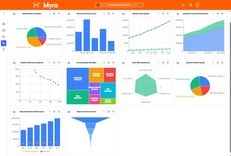
Use simple visuals
- project timelines
- budget vs. actuals
- risk heatmaps.
Boards don’t want spreadsheets; they want insight.
Final Thoughts: Fiscal Stewardship in the Digital Era
Continuous modernization isn’t a tech problem. It’s a fiscal planning challenge.
As an independent CPA, I’ve learned that successful companies approach modernization with:
- A clear financial governance model
- Ongoing risk-based evaluation
- Accountability across finance and IT
- A willingness to invest before forced to react
Modernization, when done right, improves operating leverage, enhances stakeholder trust, and future-proofs your business. But it demands rigor—especially in the budget process.
Don’t wait until systems fail or compliance flags emerge. Plan, fund, and govern modernization like the strategic priority it is.
About the Author
Tracy Weintraub, CPA
Independent consultant and auditor with over 20 years advising mid-sized and enterprise organizations on financial planning, system risk management, and modernization budgeting. Tracy has worked across industries including manufacturing, finance, healthcare, logistics, and professional services. He believes in transparency, accountability, and the power of financial foresight to support innovation.
Next Step:
🗓️ Schedule a discovery call
Talk about issues and opportunities for your current system before you are forced to react.